





When selling a house, you first think of the kitchen, bathroom, and heating. The outdoor space often takes a back seat. Yet many buyers decide during the first viewing whether they can imagine living in this house, and the seating area plays a bigger role than the sales documents suggest. This article shows when investing in the terrace and shading before a sale is worthwhile and when it is not.
Why the outdoor space matters during the viewing
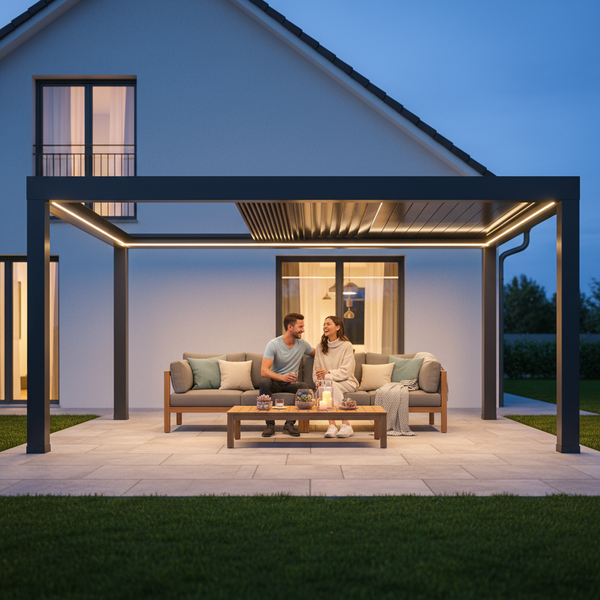
A viewing rarely lasts longer than an hour. During this time, interested parties gather impressions, not numbers. A seating area where you can immediately imagine a summer evening sticks in the mind. An empty concrete area on the blazing south facade also sticks, but with the opposite effect: it looks like a construction site that you have to tackle after the purchase.
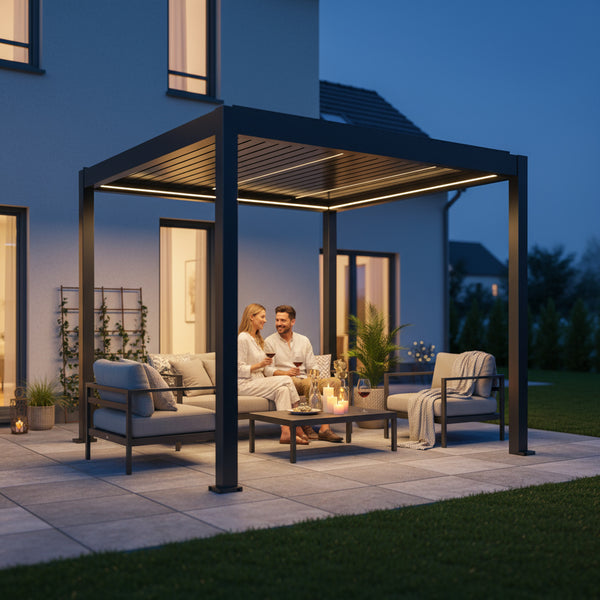
Since more people work from home, the perspective on outdoor space has shifted. A usable seating area is no longer a bonus for many families but extends the living space for a large part of the year.
What is worthwhile before a sale
Not every measure pays off. Proven are especially those tasks that make a visible difference with manageable effort:
- Maintenance instead of renovation: Tidy up lawn, hedges, and flower beds, clean joints, organize garden furniture. This mainly costs time.
- Repair surfaces: Replace loose or broken slabs. Trip hazards stand out and suggest maintenance backlog.
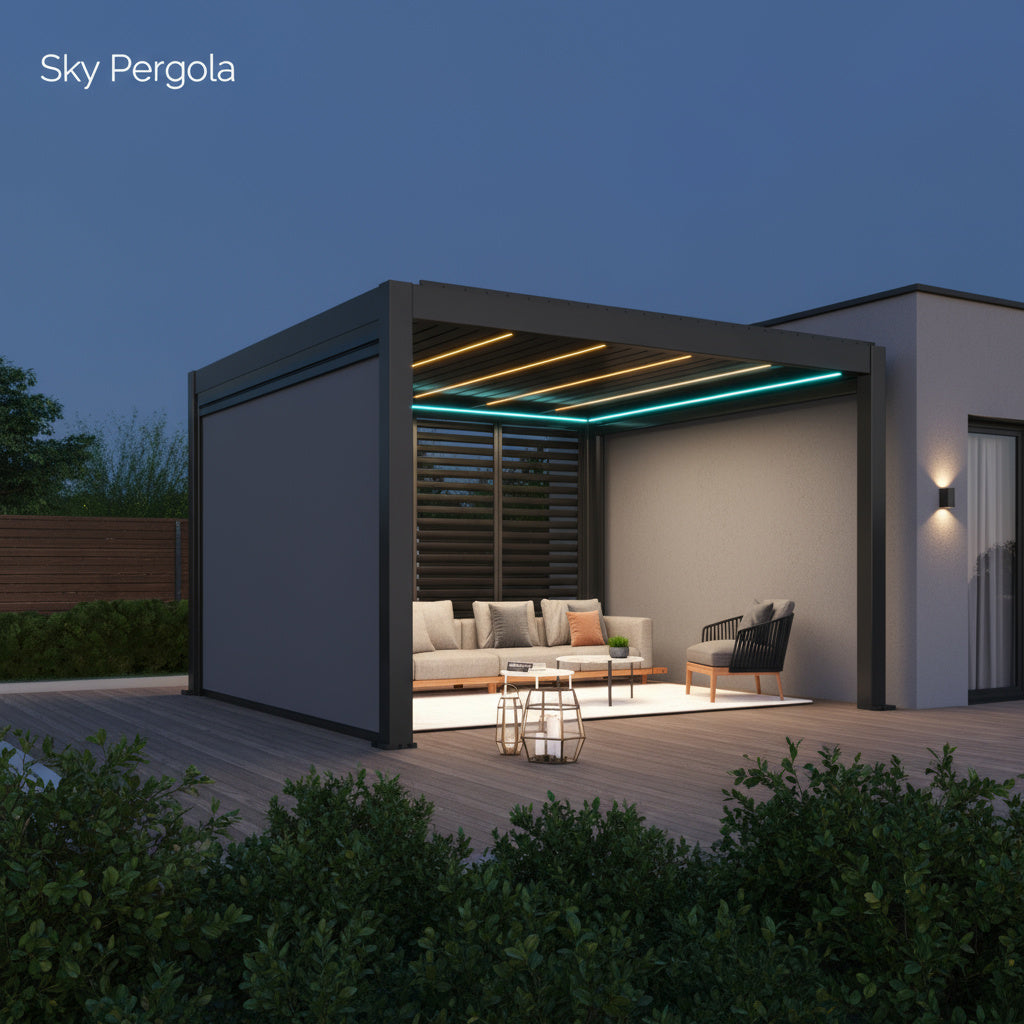
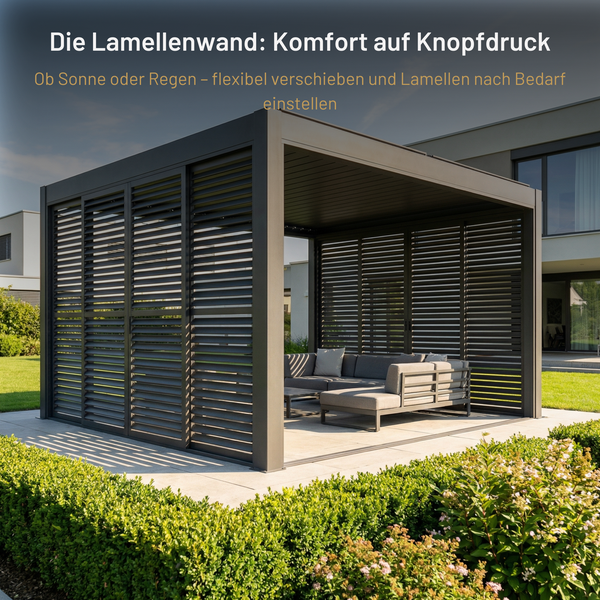
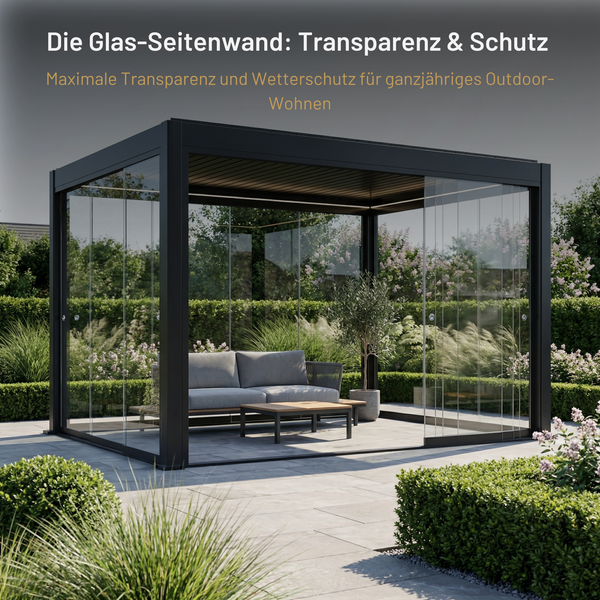
- Create shade: A terrace without shade is hardly usable in midsummer. Even a well-placed parasol or sun sail changes perception. How plants and structural shading interact is shown in our article Heat protection on the terrace.
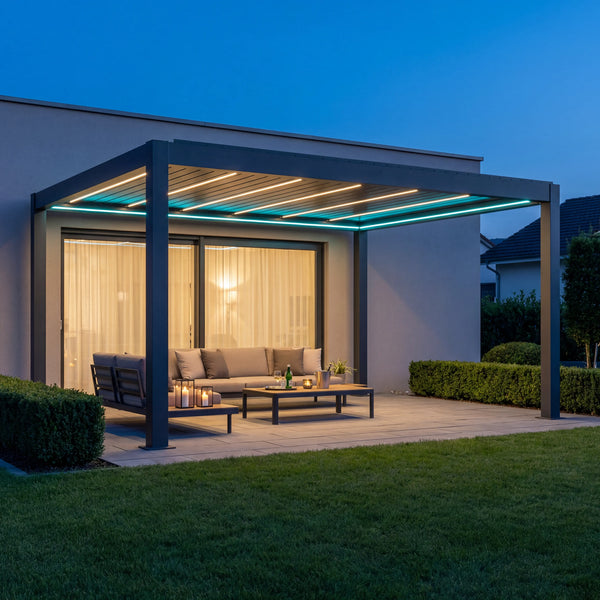
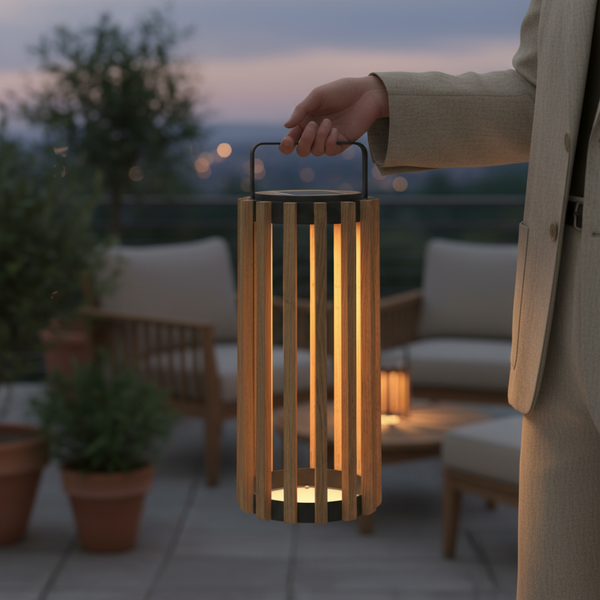
- Lighting: A few outdoor lights make the seating area enjoyable even during evening viewings.
A good overview of further measures, from neutral wall colours to garden care, is provided by the article Value enhancement tips for house sales in Aargau by Portmann Consulting. It clearly shows that often the simple steps have the greatest effect.
Fixed roofing: investment or sales argument?
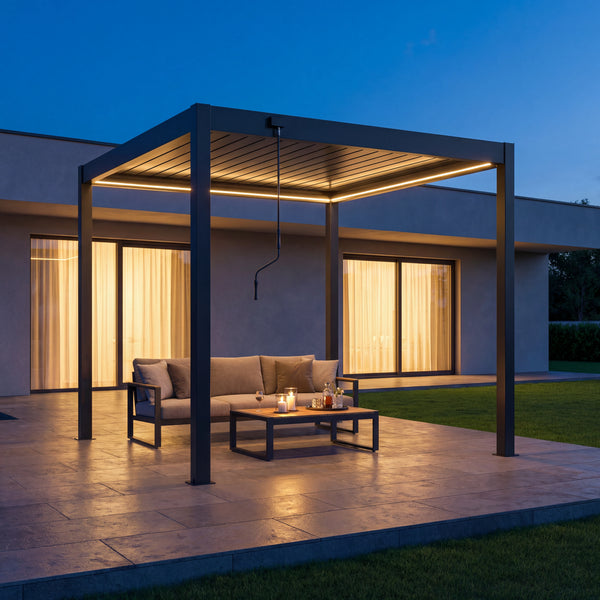
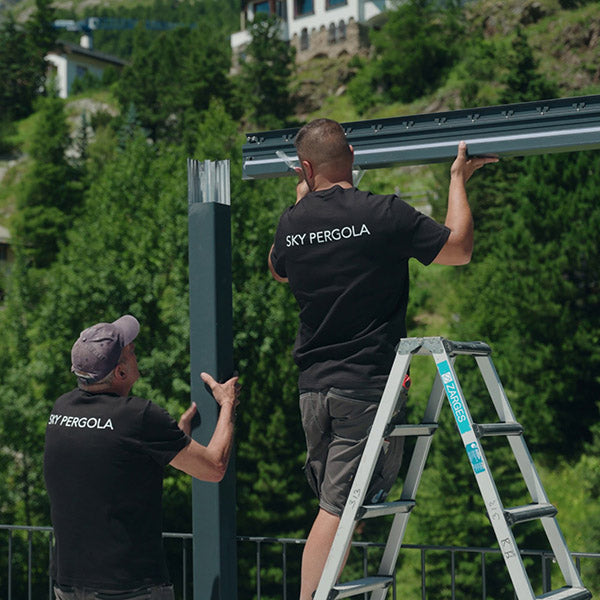
A fixed terrace roof or a louvred pergola is a larger investment. Whether it pays off immediately before a sale depends on the timing:
- Sale in the next few months: Building a roof solely for the sale is rarely sensible. Permits, delivery, and installation take time, and the price premium cannot be reliably predicted.
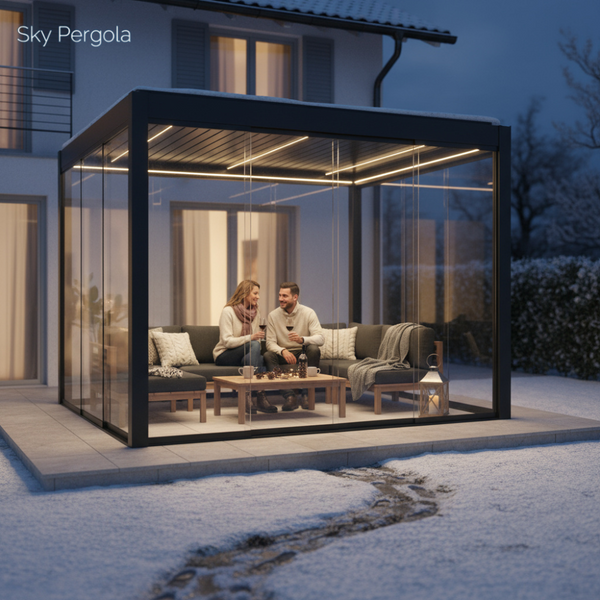
- Sale in a few years: Those who still use the outdoor space themselves benefit twice: first from their own comfort, later from a well-maintained, year-round usable seating area as an argument in the listing.
- Existing roofing: If one already exists, it belongs in the sales documents, with the year of construction, permit, and maintenance proof. Buyers ask about this.
Don’t forget permits and documents
Fixed roofs are generally subject to permit requirements in Switzerland. If the permit is missing, it becomes an issue during the sale: buyers and banks ask about it, and in the worst case, financing is delayed. Therefore, anyone planning a roof should inquire early with the municipality and keep all documents well organized, also with a view to a later sale.
Conclusion
The outdoor space sells along. Before a sale, maintenance, small repairs, and shade are especially worthwhile. A fixed roof is a good decision if you still use it yourself for several years and document it properly. If you are unsure what is worthwhile in your specific case, it is best to get an independent assessment on site.


