
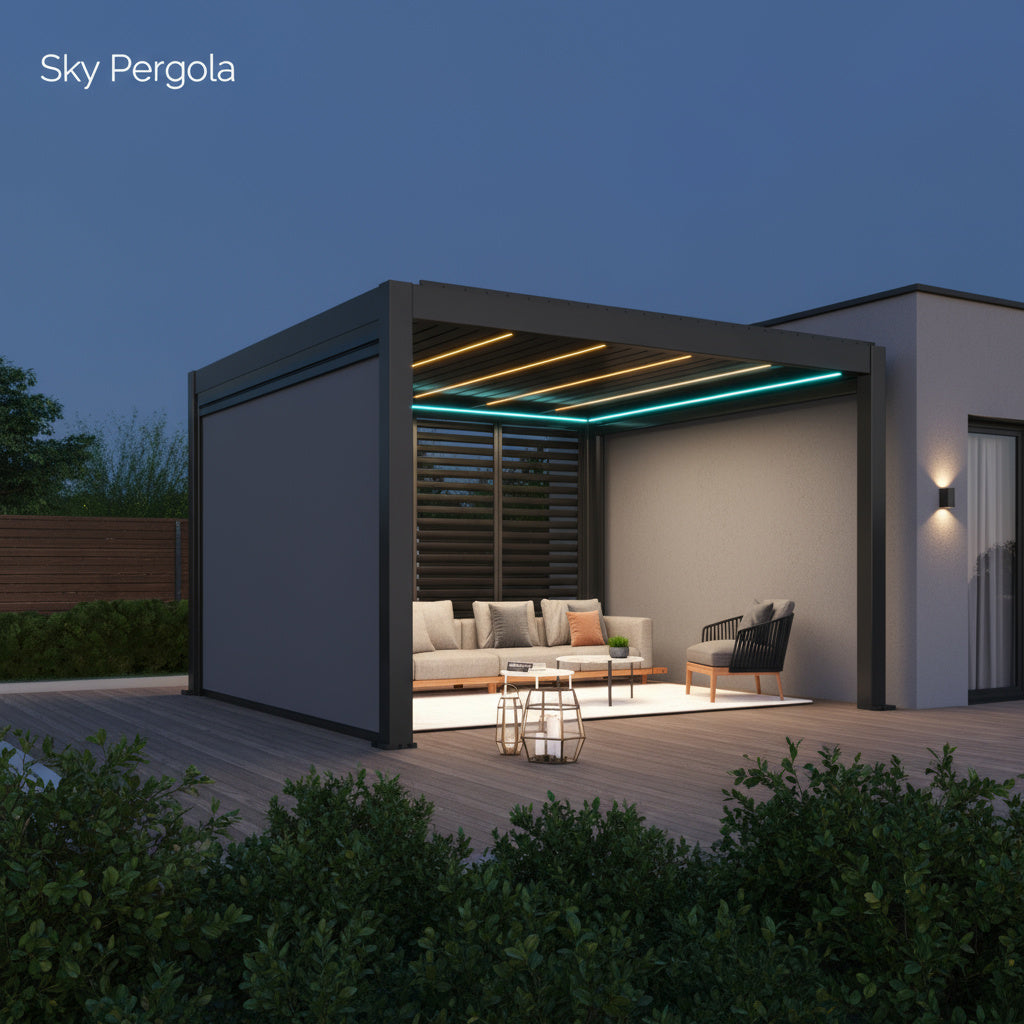
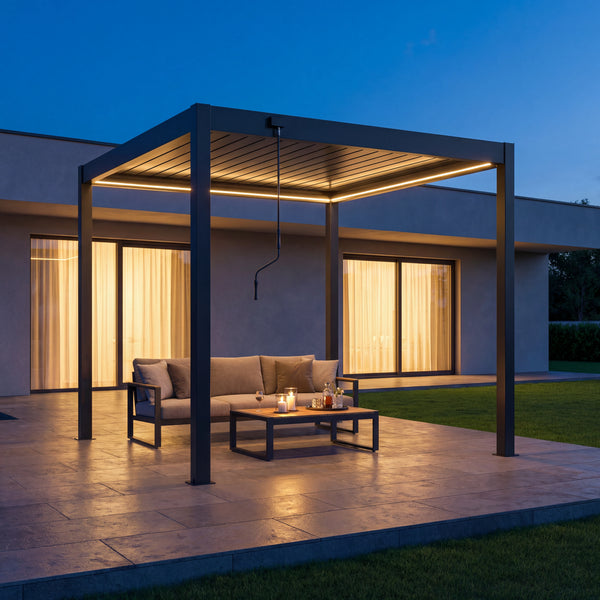
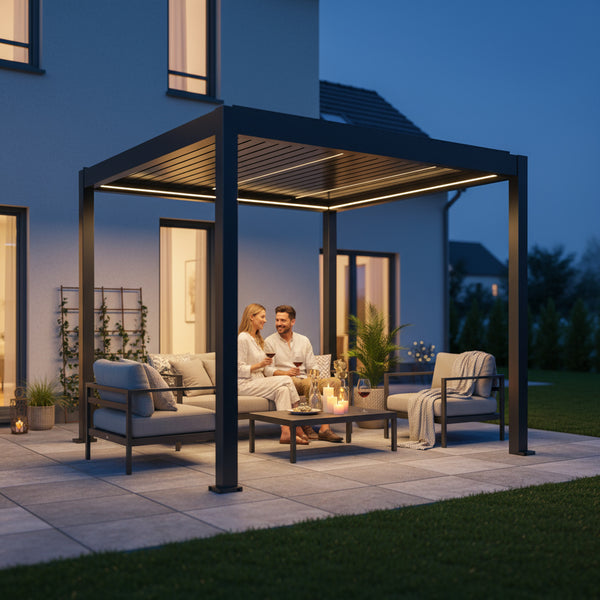
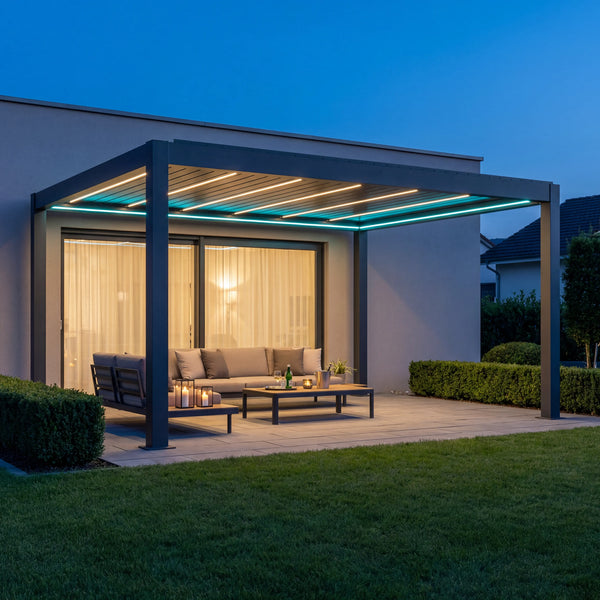
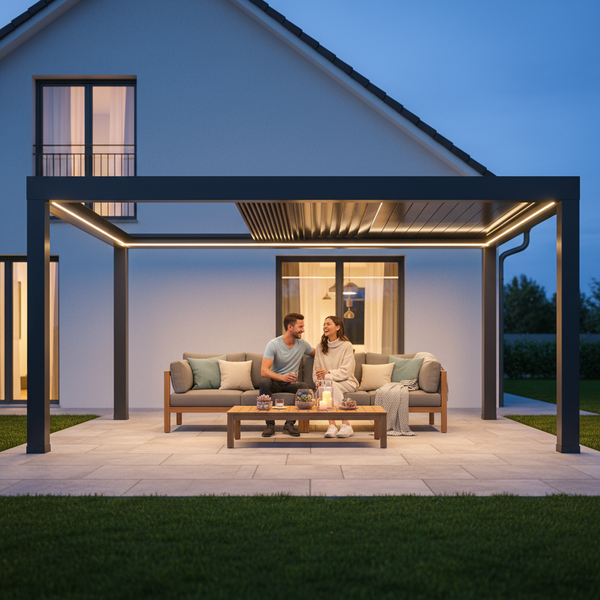
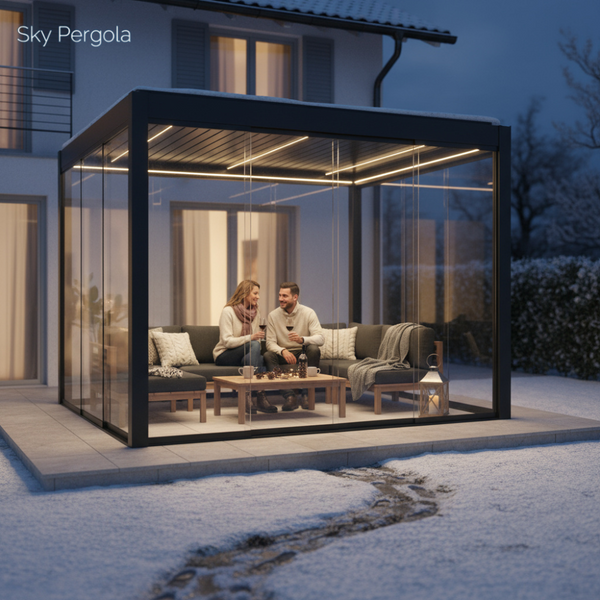

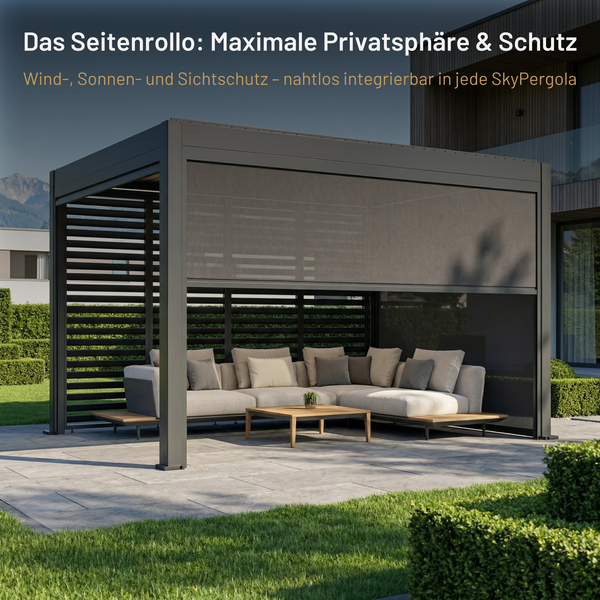
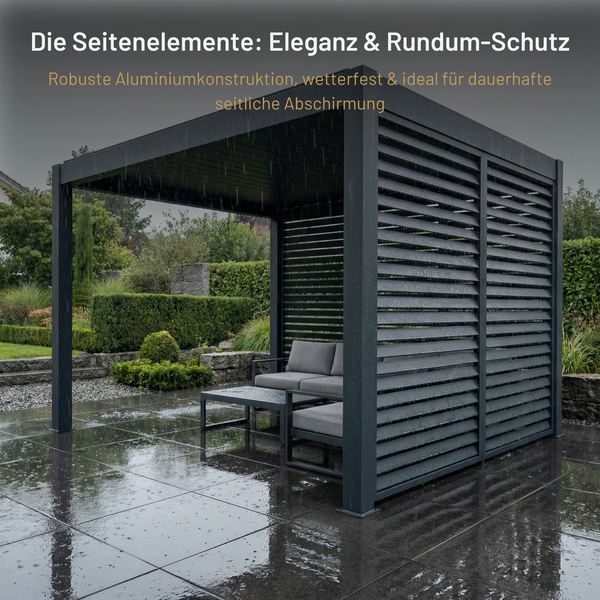


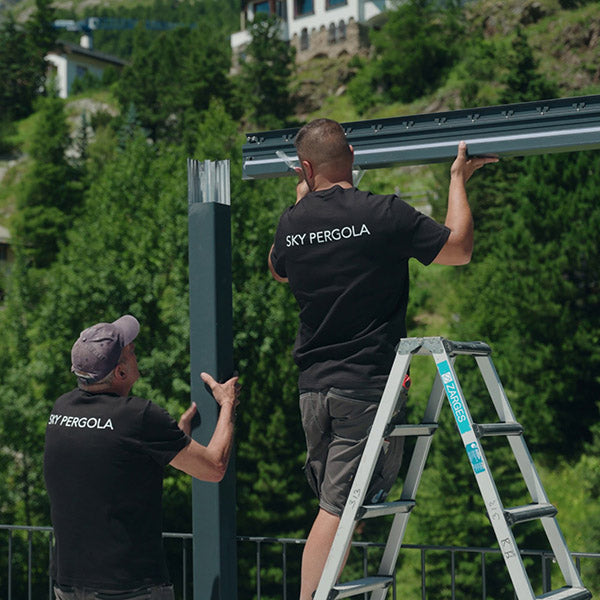
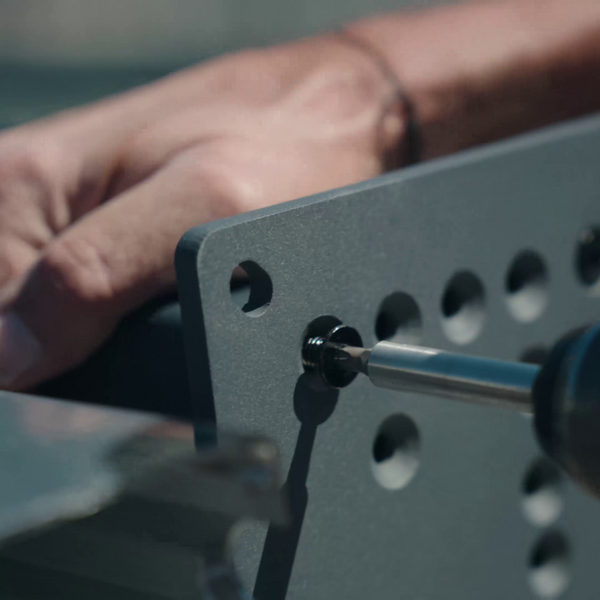

In the UAE, the terrace is often the most underused part of a home. For four or five months of the year, it bakes in 45°C heat, then sandy winds and occasional winter showers keep you indoors the rest of the time. An adjustable aluminium louvre pergola changes that equation. By giving you control over shade, airflow, and rain protection, it turns a seasonal space into one you can genuinely use from January to December. Here is how that works in the Gulf climate, and what actually matters when you plan one.
Why a fixed canopy falls short in the Gulf
Many villas in Dubai already have some kind of shade structure: a timber pergola, a tensile fabric sail, or a polycarbonate roof. The problem is that all of these are fixed. A solid roof traps hot air underneath and creates a stuffy pocket exactly when you want a breeze. A fabric sail flaps, sags, and degrades under constant UV exposure. Timber dries out, cracks, and is vulnerable to termites in the humidity that rolls in off the coast.
An adjustable louvre roof solves the core issue: the Gulf climate is not one condition, it is several, and they change throughout the day. A pergola whose aluminium blades rotate lets you respond to whatever the weather is doing instead of committing to a single compromise. That is the difference between a structure you tolerate and one you actually live under.
Tuning your terrace through the UAE seasons
The real value of a louvre roof shows up when you map it against the local calendar.
Summer (roughly May to September)
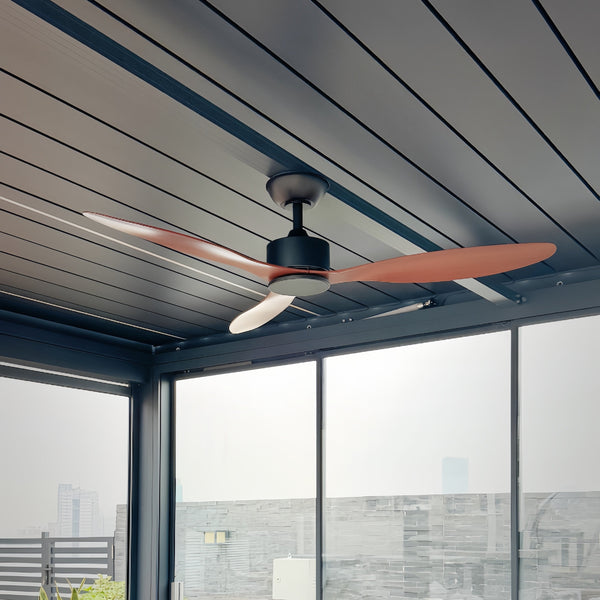
This is the test no shade structure in Dubai can avoid. With daytime temperatures regularly above 42°C, the goal is to block direct sun while still letting heat escape. Angling the louvres so they cut the harsh overhead sun, rather than closing them flat, leaves a gap for hot air to vent upward instead of pooling beneath the roof. The early mornings and the hours after sunset become genuinely usable again. Many homeowners pair the pergola with misting or a ceiling fan, and the partial shade plus moving air makes a noticeable difference in perceived temperature.
The shoulder months (April and October)
These are arguably the best terrace months in the Emirates, and where an adjustable roof earns its keep. Mornings are mild, afternoons still strong. You can open the blades fully at breakfast to let the low sun in, then close them progressively as the sun climbs. It is the kind of fine-tuning a fixed roof simply cannot offer.
Winter (November to March)
Dubai winters are why people move here, and they are when a terrace becomes a second living room. Open louvres let in the gentle sun on cool mornings. When the occasional rain band passes through, usually between December and February, you close the blades fully and the integrated guttering channels water away, keeping your furniture and floor dry. You get an outdoor room that works whether it is sunny or wet.
The Gulf-specific details that make or break a pergola
Not every louvre pergola is built for this climate. A few factors matter far more here than they would in a milder region.
| Gulf challenge | What to look for |
|---|---|
| Intense, year-round UV | Powder-coated aluminium that holds its colour; UV-stable seals and gaskets rather than cheap rubber that perishes |
| Coastal salt and humidity | Marine-grade or properly treated aluminium, stainless fixings, and no untreated steel that can rust near the water |
| Fine sand and dust | Smooth, sealed blade profiles and accessible guttering that can be rinsed clean; avoid intricate joints where sand collects |
| Sudden heavy rain | Generous internal gutters and downpipes sized for short, intense downpours, not light drizzle |
| Strong shamal winds | Engineered post spacing and wind ratings suited to your specific location and exposure |
Aluminium is the right material for all of these reasons: it does not rust, shrugs off UV, and needs little more than an occasional rinse to stay looking new. That low maintenance matters when sand and salt are working against every surface outdoors. If you want to go deeper on the material itself, our guide to an aluminium pergola in Dubai covers it in detail.
Orientation: a free upgrade most people overlook
Where your terrace faces dramatically changes how you use the pergola, and it costs nothing to plan around. A west-facing terrace takes the brutal late-afternoon sun and benefits most from blades that can close tight in the early evening. A north-facing space stays more comfortable and can run open louvres for much of the year. South and east terraces sit somewhere in between. Before you settle on a layout, spend a few days noting when the sun hits hardest and where you actually want to sit. That observation will guide blade orientation and post placement better than any showroom can.
Turning a roof into an outdoor room
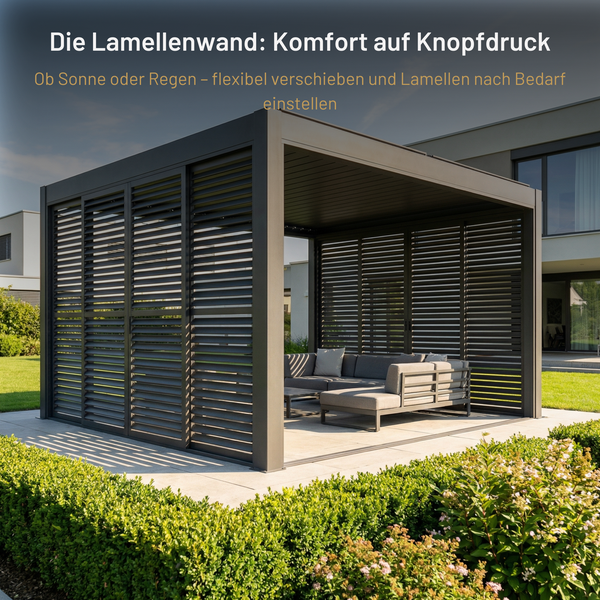
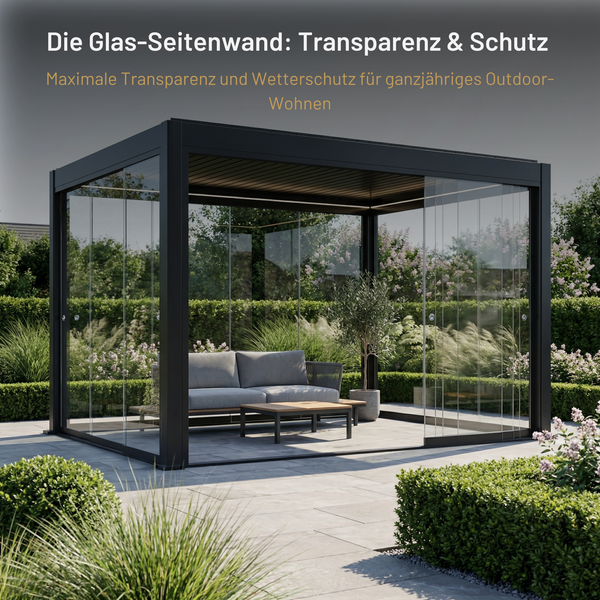
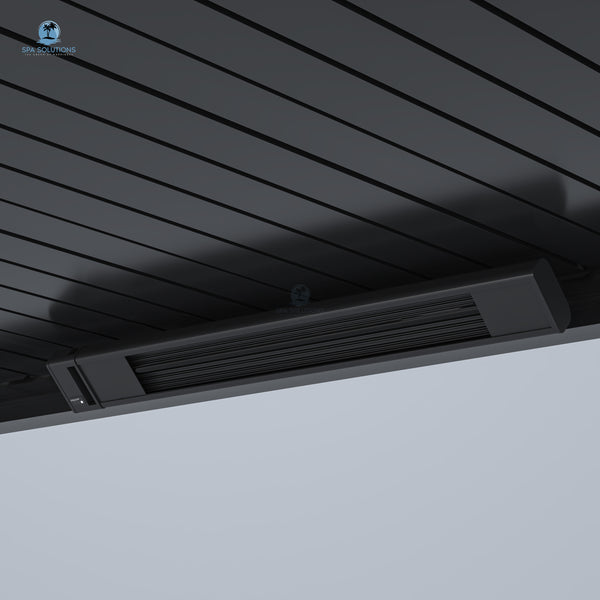
The louvre roof is the foundation, but the Gulf climate rewards going a step further. Integrated LED strips extend the usable evening, which is when most outdoor living happens here anyway. Glass or zip-screen side walls let you close off a side against blowing sand or the afternoon glare, and they make a real difference to comfort in the windier months. Built-in heating is rarely needed, but a fan almost always is. Thinking about these from the start, rather than bolting them on later, gives a cleaner result and lets the wiring be hidden inside the frame.
If you are weighing a roof that adjusts versus one that is fully fixed, our explainer on a bioclimatic pergola in Dubai walks through how the adjustable system manages heat and airflow, which is the whole point in a climate like this one.
Planning your own build
Every villa terrace is different, so the smartest first step is to sketch out dimensions, count how the sun moves across the space, and decide which add-ons you genuinely need. You can rough out size, colour, and roof options yourself with our online pergola configurator to get a feel for the proportions before anyone visits. A 4 by 3 metre footprint suits most family seating areas; larger entertaining spaces often go to 5 or 6 metres on the longer side, which is where wind engineering and post spacing start to matter more.
From seasonal to year-round
A terrace in the UAE does not have to be a place you abandon every summer and rediscover every winter. With an adjustable aluminium louvre roof built for Gulf conditions, you get shade when the sun is fierce, airflow when it is humid, and a dry, sheltered room when the rain comes. The result is a space that works in every month of the year rather than just a handful.
If you would like advice tailored to your own terrace, its orientation, and the way you want to use it, we are happy to talk it through. Book a free, no-obligation consultation and we will help you plan a pergola that fits your home and the Dubai climate.


