
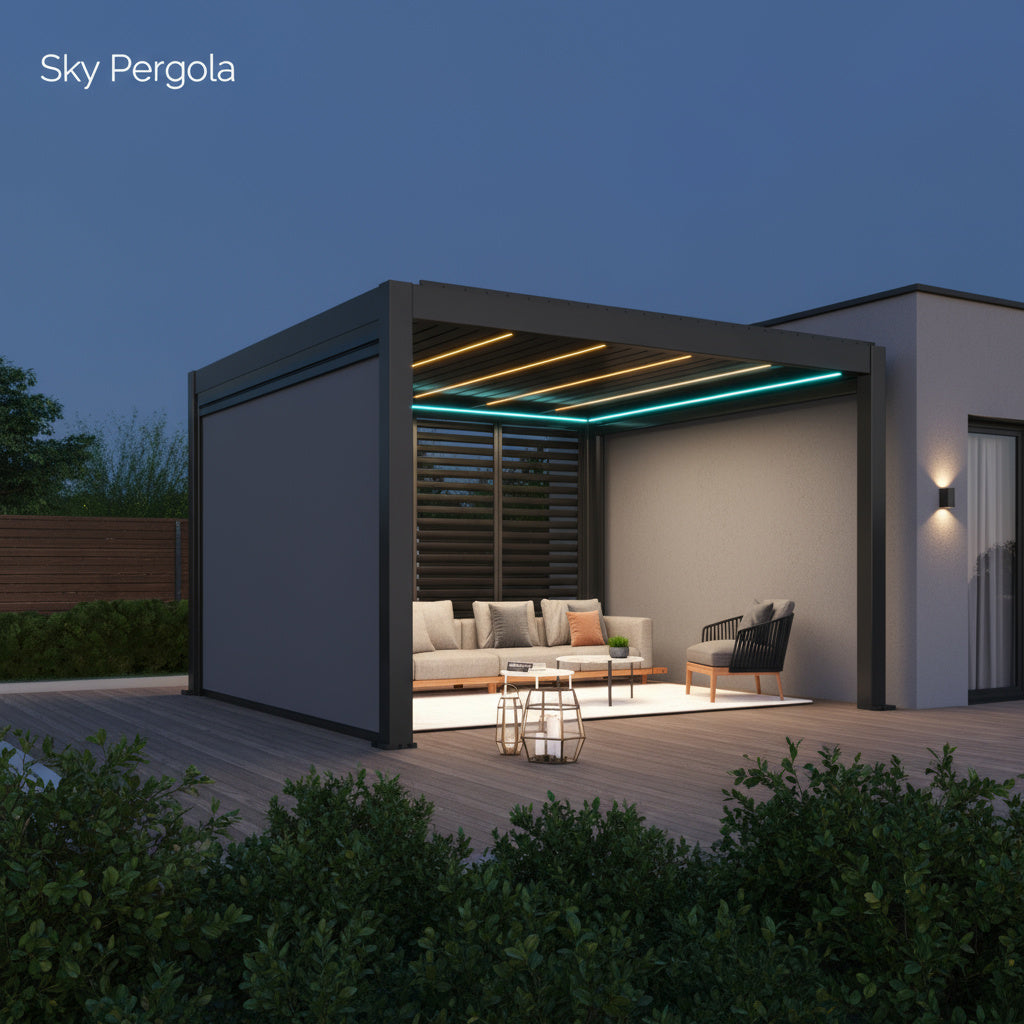
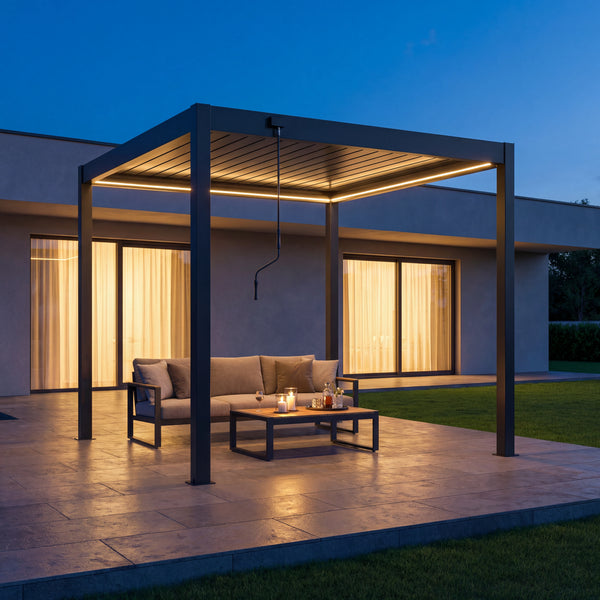
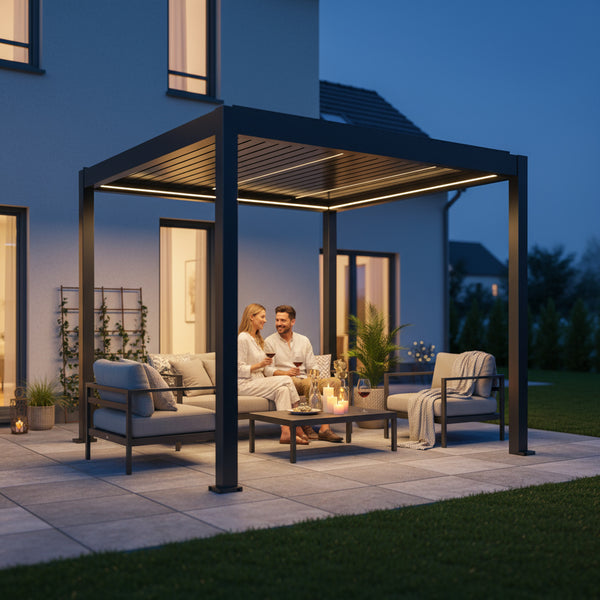
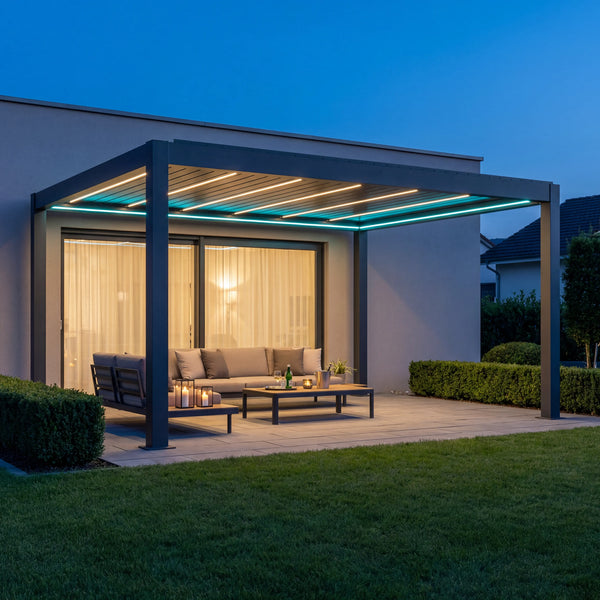
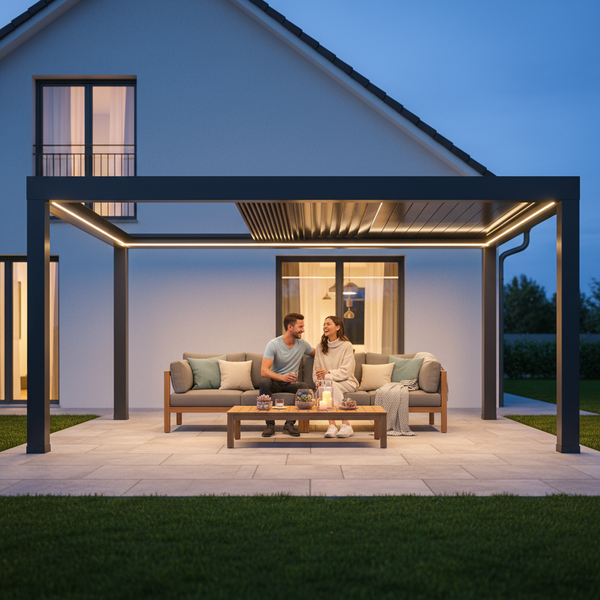
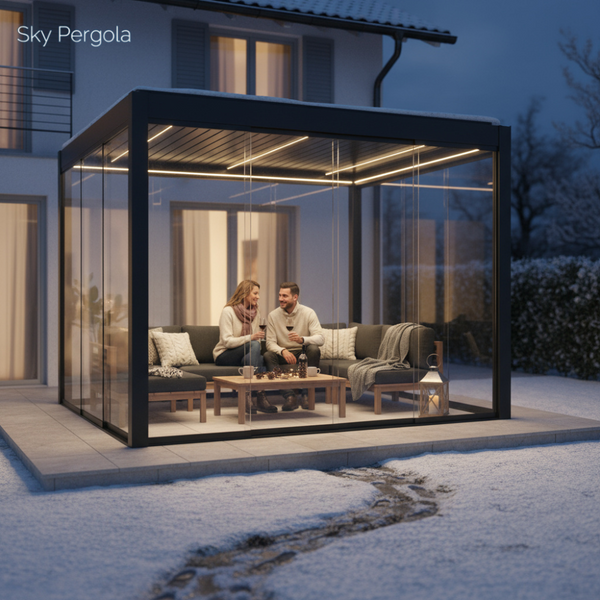

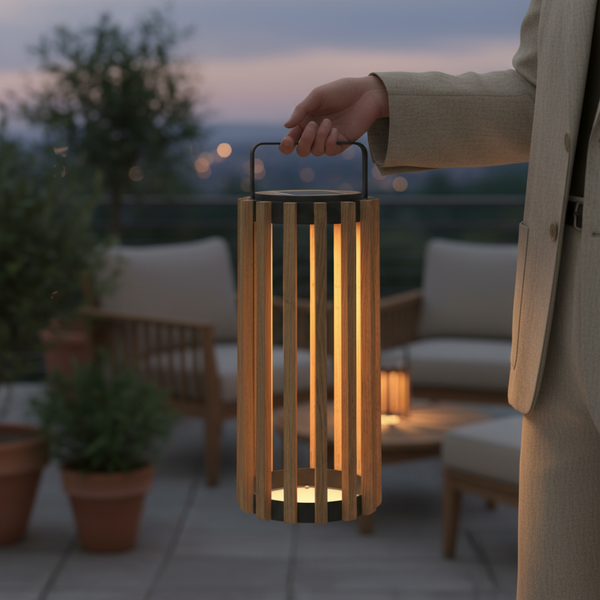



In Dubai, the pergola only really comes alive after sunset. Daytime temperatures from May to September keep most outdoor living to the cooler hours, which means how your pergola behaves in the evening matters more than how it looks at noon. Good lighting and smart automation turn an aluminium louvre roof from a daytime shade structure into a genuine second living room you actually use from October through April, and on tolerable summer nights too.
This guide covers practical lighting and automation ideas tailored to Gulf conditions, salt-laden coastal air, high humidity, sandstorm dust, and the way villas and apartment terraces are typically used here. The goal is fewer gimmicks, more comfort, and reliability.
Why evening use drives the design in the UAE
Across the Emirates, the comfortable outdoor window is heavily skewed toward evening. Even in peak summer, terraces become usable once direct sun is gone and a breeze picks up. That single fact should shape three decisions: where you place light, how you control the louvres after dark, and how you manage heat and airflow.
An aluminium louvre roof pergola has a built-in advantage here. The rotating blades let warm air that has built up under the roof during the day escape as you open them in the evening, while still letting you close them quickly if a coastal humidity spike rolls in off the Gulf. Lighting and automation should work with that movement, not against it.
Lighting layers that work outdoors in the Gulf
The most common mistake is a single bright fixture that floods the space and attracts every insect in the neighborhood. Layered lighting looks better, uses less energy, and gives you control over the mood.
1. Integrated blade and beam lighting
LED strips installed inside the perimeter beams or along the louvre channels provide soft, even ambient light without glare. Because they are tucked into the aluminium profile, they stay protected from blowing sand and are easy to clean. Look for fixtures rated at least IP65 for dust and water resistance, and specify marine-grade or properly anodized/powder-coated housings if you are near the coast in areas like Palm Jumeirah, JBR, or Abu Dhabi's Corniche, where salt air accelerates corrosion on cheap hardware.
2. Warm color temperature
For relaxed Dubai evenings, 2700K to 3000K (warm white) creates an inviting atmosphere and enhances both the aluminium finish and your landscaping. Cooler 4000K+ light feels clinical outdoors. If you entertain often, dimmable circuits or tunable-white LEDs allow you to shift from a bright dinner setting to a low lounge glow later in the night.
3. Task and accent light
Add focused light where you actually do things: over the dining table, at an outdoor kitchen or BBQ counter, and along steps. Uplighting on a feature wall or a palm gives depth. Keep accent fixtures on a separate circuit so you are not forced to choose between "everything on" and "everything off."
4. Insect-aware placement
Humidity near water features and the marina draws insects. Warmer color temperatures attract fewer bugs than cool white, and positioning brighter fixtures slightly away from seating (then letting reflected light fill the space) keeps the dining area clearer.
Smart automation that earns its keep
Automation should solve real Dubai problems, not just add an app. The features below genuinely improve daily comfort and protect the structure.
| Feature | What it does | Why it matters in the UAE |
|---|---|---|
| Motorized louvres | Open/close and tilt the blades on a remote or app | Vent built-up daytime heat in the evening; close fast against humidity or rare rain |
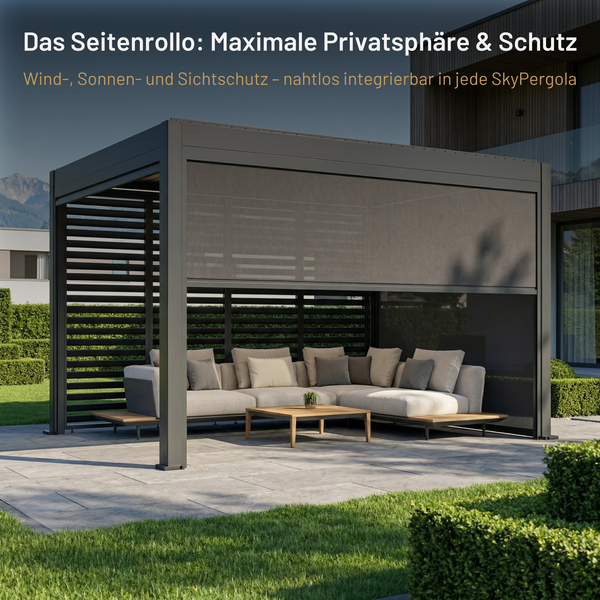
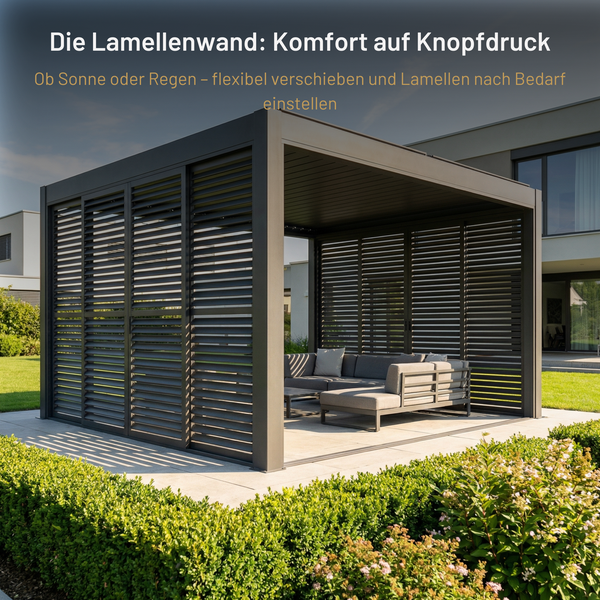
| Rain & wind sensors | Auto-close roof and retract screens in bad weather | Protects furniture during sudden winter showers and shamal wind events |
| Lighting scenes | One tap sets dinner, lounge, or party lighting | Effortless evening transitions without fiddling with switches |
| Scheduling | Lights and louvres follow sunset times automatically | Matches Dubai's evening-led outdoor routine year-round |
| Smart-home integration | Links to existing home systems and voice control | Control pergola alongside AC, music, and gates from one place |
Sensors are not optional here
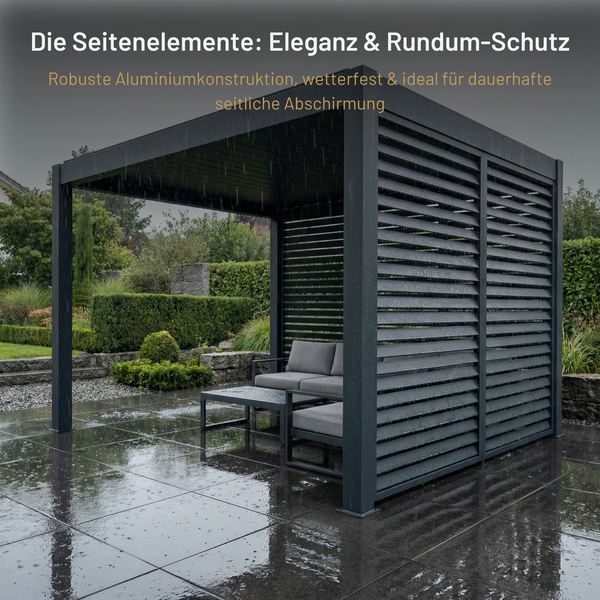
Dubai weather is mostly predictable until it isn't. Winter brings occasional heavy downpours, and shamal winds carry dust and sudden gusts. A wind sensor that retracts side screens and a rain sensor that closes the roof protect cushions, electronics, and the louvre mechanism. This is one automation that pays for itself the first time it saves a set of soaked outdoor sofas.
Plan for heat management at night
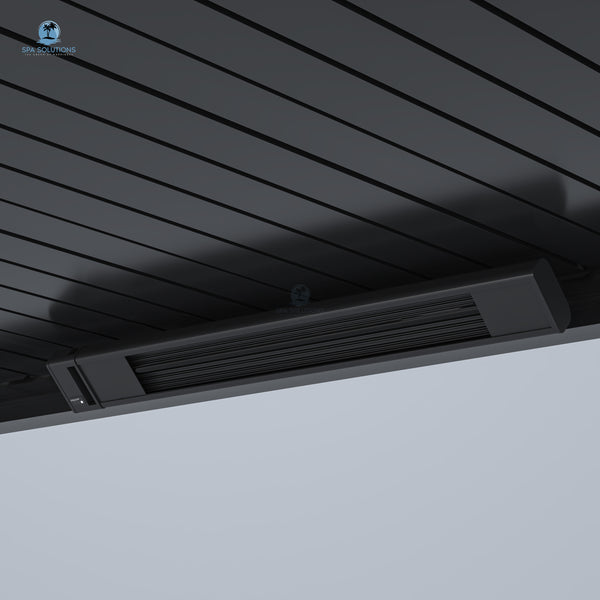
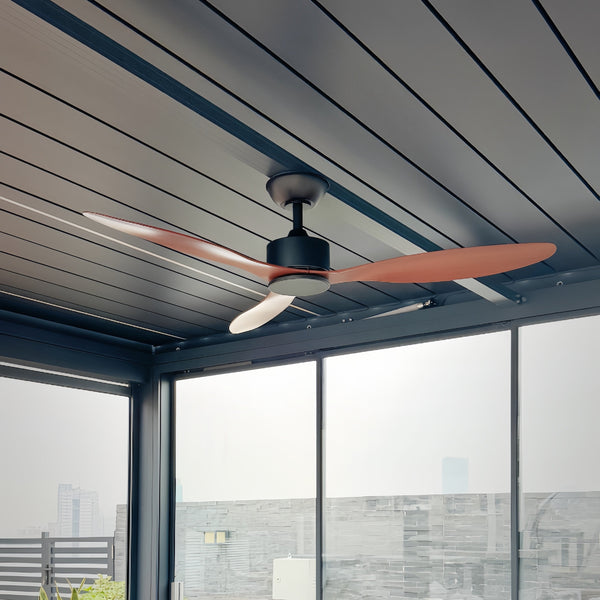
An evening on a terrace can still be warm in the shoulder seasons. Pairing motorized louvres with integrated fans or a misting line, controlled from the same system, makes the space comfortable earlier in the season. In the cooler months, an automated heater on the same controller extends usable evenings into the genuinely pleasant December to February stretch.
Specifying for reliability in Gulf conditions
Electronics outdoors in the UAE face heat, fine dust, and humidity that few residential products are designed for. A few specification points separate a system that lasts from one that fails in its second summer:
- Ingress protection: insist on IP65 or higher for any fixture or control exposed to the elements, and sealed, properly glanded cable entries.
- Heat tolerance: confirm drivers and controllers are rated for the high ambient temperatures inside an enclosed beam, which run hotter than open air.
- Corrosion resistance: near the coast, choose stainless fixings and quality powder-coated or anodised aluminium over untreated metal.
- Serviceability: ask how a failed LED strip or motor is replaced. Concealed, modular runs that can be swapped without cutting into the structure save money later.
- Local support & warranty: a system is only as good as the team that maintains it. Confirm parts availability and after-sales support in the UAE.
Doing this well from the start is far cheaper than retrofitting. If you are still at the planning stage, our guides on the aluminium pergola in Dubai and on pergola installation in Dubai cover how lighting conduits and motor wiring should be designed into the frame before fabrication, rather than bolted on afterward.
A simple plan for most villas and terraces
If you want a sensible starting point, this combination suits the majority of Dubai homes and works well across both villa gardens and apartment terraces:
- Warm-white (2700K-3000K) integrated LED in the beams, on a dimmer.
- Separate accent circuit for feature walls or planting.
- Motorised louvres with a wind and rain sensor.
- Two or three saved lighting scenes for dinner, lounging, and entertaining.
- Optional integrated fans, misting, or a heater on the same controller for season-by-season comfort.
From there you can scale up to full smart-home integration and voice control, but even this baseline transforms how often the space gets used after dark.
Bring it together for your space
Lighting and automation are where a pergola stops being a structure and becomes a room. The right specification for your home depends on orientation, proximity to the coast, how you entertain, and your budget. You can explore configurations and finishes with our online pergola configurator to see options before you commit.
If you would like tailored advice on lighting layouts, automation, and what will hold up best in your part of the UAE, book a free, no-pressure consultation with our team. We are happy to walk through ideas, share examples, and help you plan an evening setup you will actually use.


