






A villa renovation is the best moment to fix a terrace that nobody uses in summer. The walls are open, the contractors are on site and the budget is on the table. Yet shade is often the last item on the list, added once the tiles are down and the electrics are closed. This article shows why it pays to plan terrace shade from the start and which questions to settle early.
Why shade belongs in the renovation scope
A pergola or shade structure touches several trades. It needs fixings or footings, a power supply for motors and lighting, a route for rainwater and a floor finish that works around the posts. If these points are decided late, the result is cut tiles, surface cables and a second round of work on a finished terrace. Planned together with the rest of the scope, the same items are small line entries.
This is also where a single point of responsibility helps. Villa renovation project management keeps structure, MEP and finishes on one programme, so the shade structure is coordinated with the rest of the work and not bolted on at the end.
Five questions to settle before the design is final
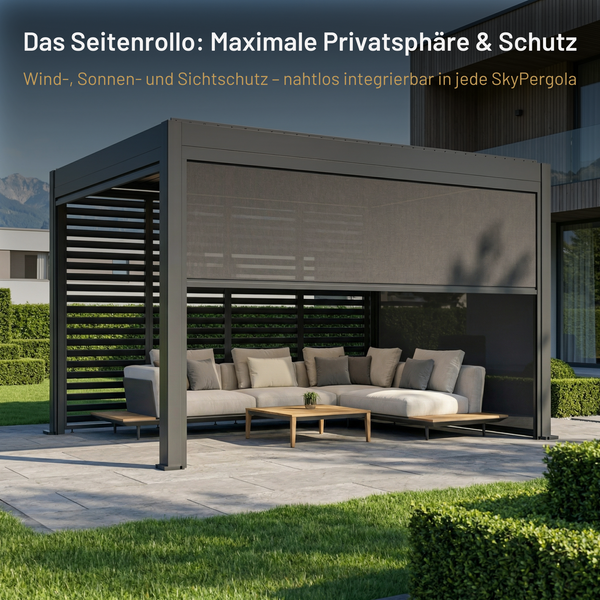
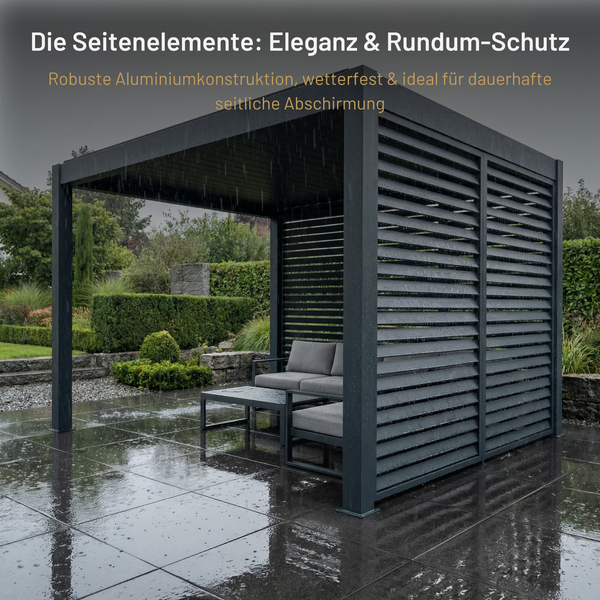
- Where is the sun at the hours you use the terrace? A west-facing terrace needs protection from low evening sun, a south-facing one from high midday sun. This decides the depth of the structure and whether side screens are worthwhile.
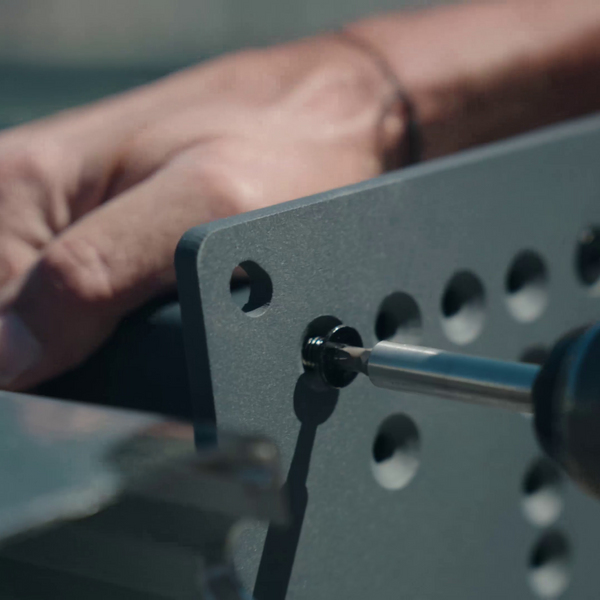
- Attached or freestanding? A wall-mounted structure depends on the condition of the facade, which is easy to inspect while the renovation is running. A freestanding one needs its own footings, ideally poured before the final floor.
- What is under the floor? Waterproofing, drainage and pipework limit where anchors can go. Check this before the post positions are fixed.
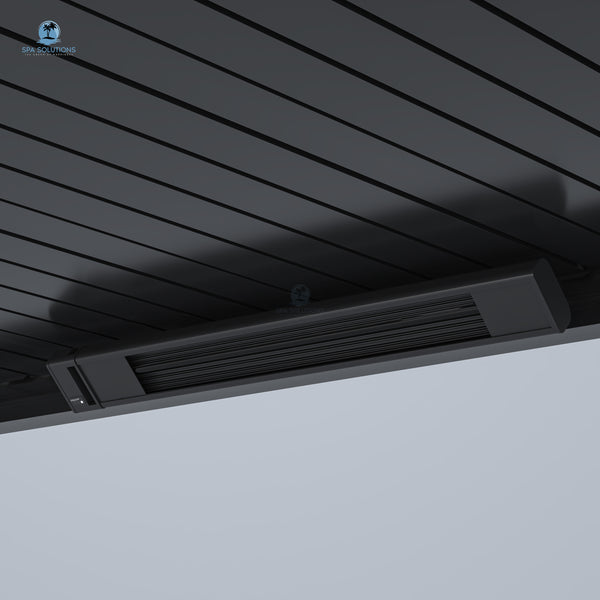
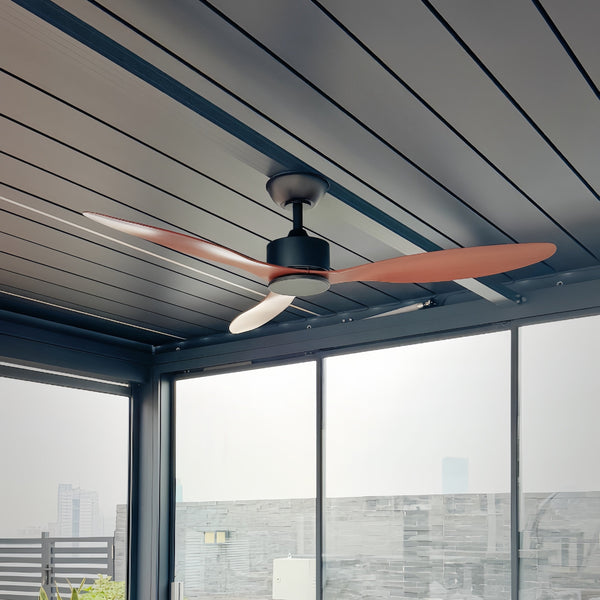
- How much power is needed? Motorised roofs, LED lighting, fans and heaters all need a supply. Conduits are simple to add now and awkward to add later.
- Where does the rainwater go? Even in the UAE, a covered terrace needs a planned drainage route, and a louvred roof usually leads water through its gutters and posts.
Approvals are part of the programme
Structures on a villa plot usually need the consent of the community developer, and depending on the project a permit from the relevant authority as well. Requirements differ from community to community, so ask early and include drawings with dimensions and the position on the plot. When the shade structure is submitted with the renovation works, it does not need a separate round of approvals later.
Choosing the type of shade
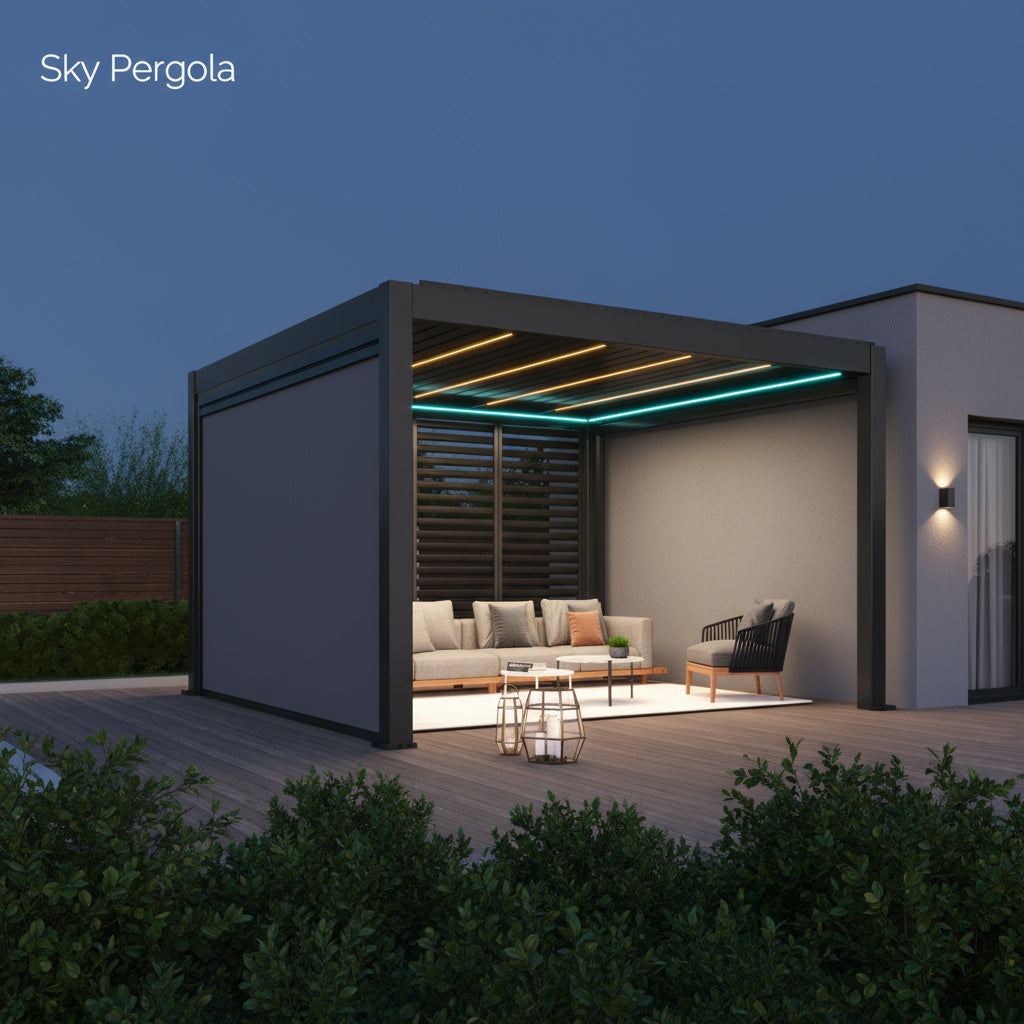
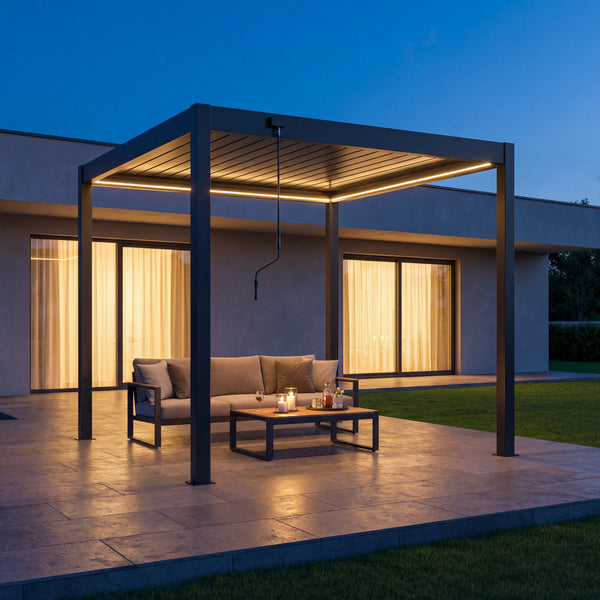
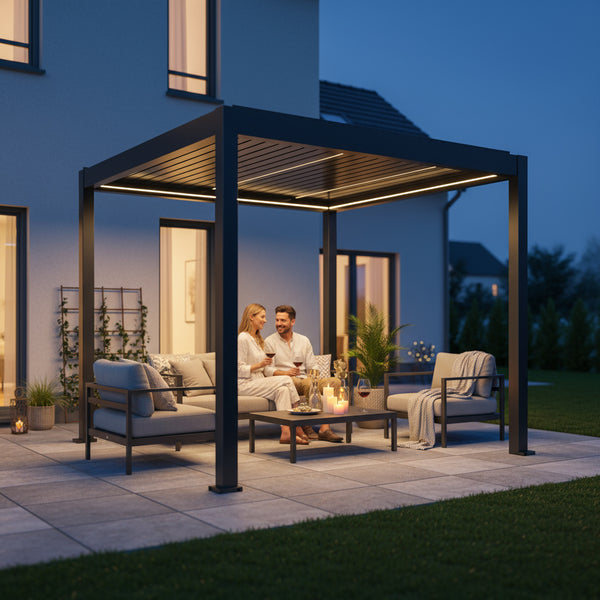
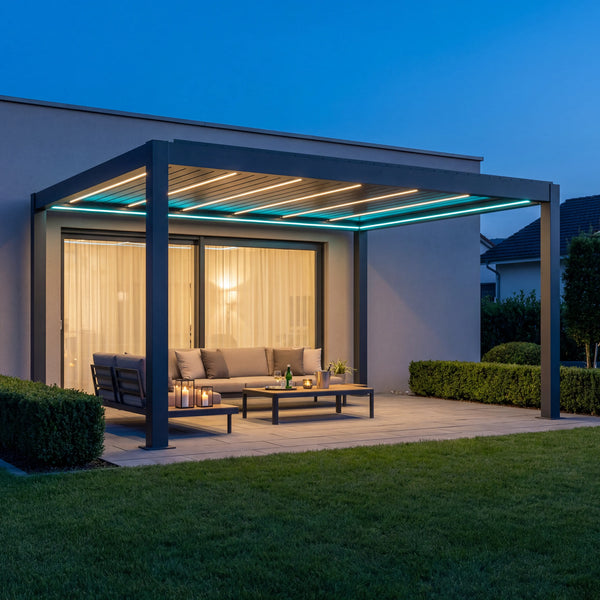
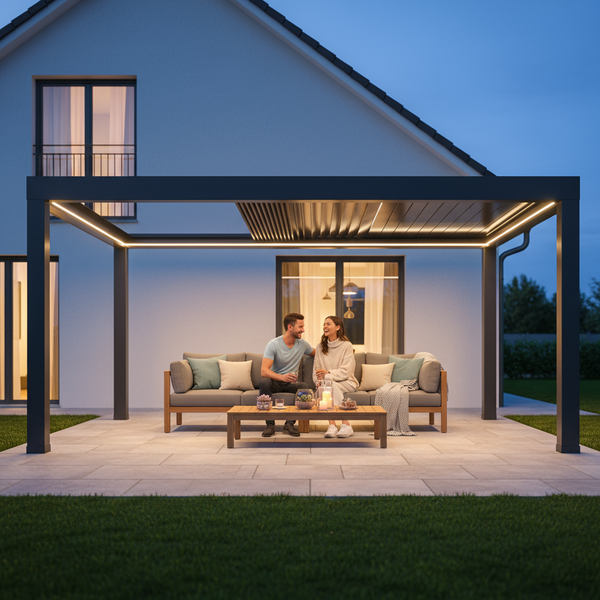
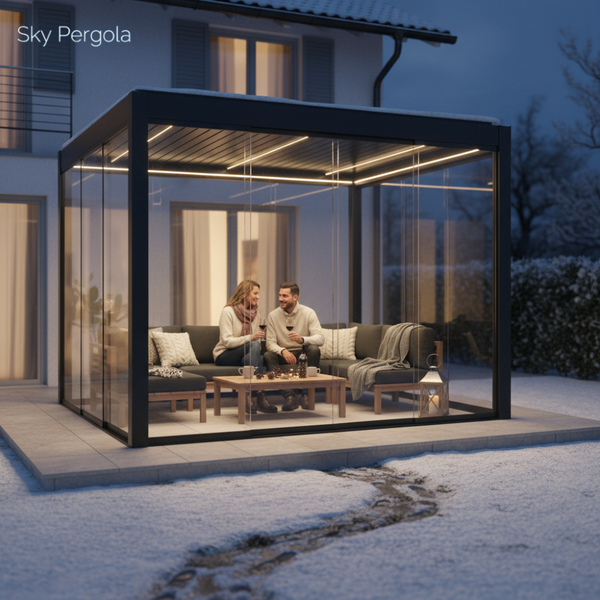
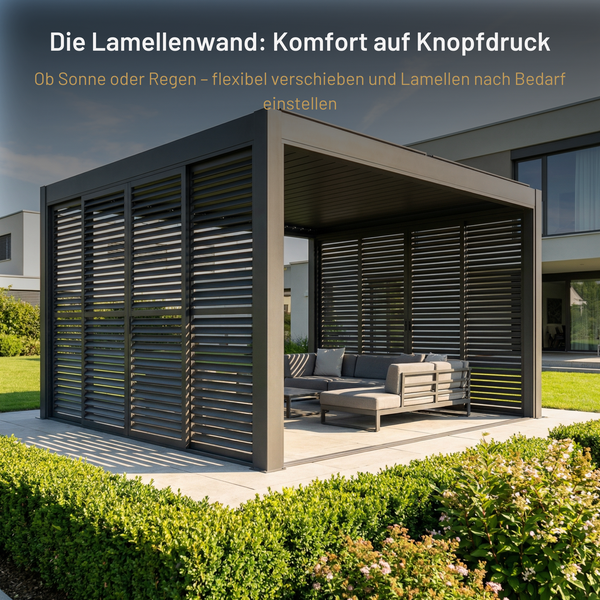
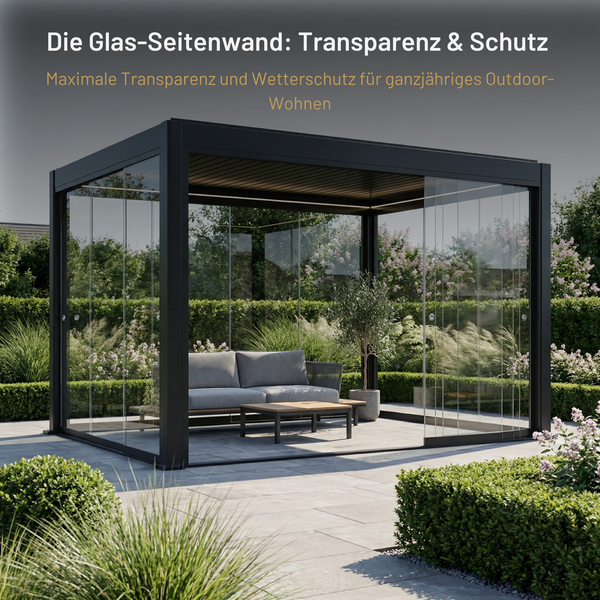
A fixed roof gives constant shade but can trap heat and darken the rooms behind it. Fabric awnings are light and inexpensive, but they have to be retracted in strong wind. An aluminium pergola with a motorised louvred roof sits between the two: the blades close for full shade and open to let hot air escape, and they can follow the sun through the day. Aluminium also copes well with heat and sand and needs little more than regular cleaning.
Size follows use. Before the design is final, mark the dining table, the seating and the walking routes on the terrace, then add the structure around them. In our pergola configurator you can try size, colour and options in 3D and take the result into the renovation discussion.
Timing on site
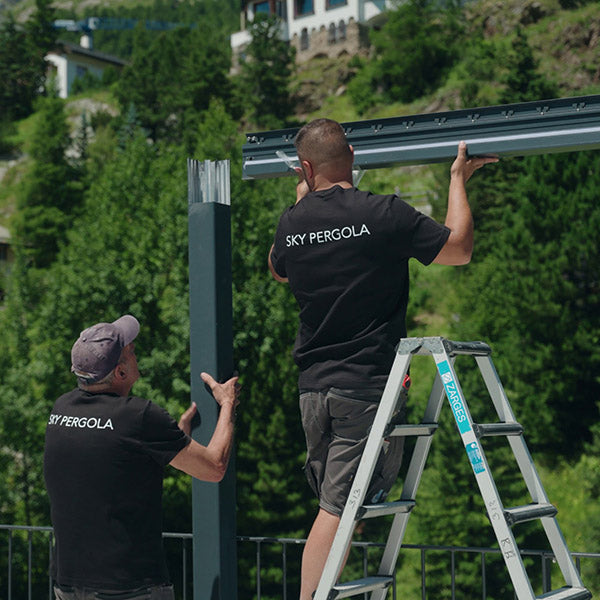
A workable order is: footings and conduits with the early works, floor finishes next, and the pergola itself towards the end, so it is not exposed to site damage. Lighting and screens are commissioned with it. Agree this sequence with your project manager and contractor before work starts.
Conclusion
Terrace shade is much simpler when it is part of the renovation and not a project of its own afterwards. Settle orientation, fixings, power, drainage and approvals early, and the terrace will be ready to use when the handover is done.


