




Choosing an aluminium pergola for a villa in the UAE comes down to one early decision that shapes everything else: do you want a roof that moves, or one that stays put? Both bioclimatic (adjustable louvre) and fixed-roof pergolas are excellent in the Gulf when built from the right materials, but they behave very differently across a Dubai or Abu Dhabi year. This guide walks through the real trade-offs for our climate, not generic advice copied from cooler markets.
What "bioclimatic" and "fixed-roof" actually mean
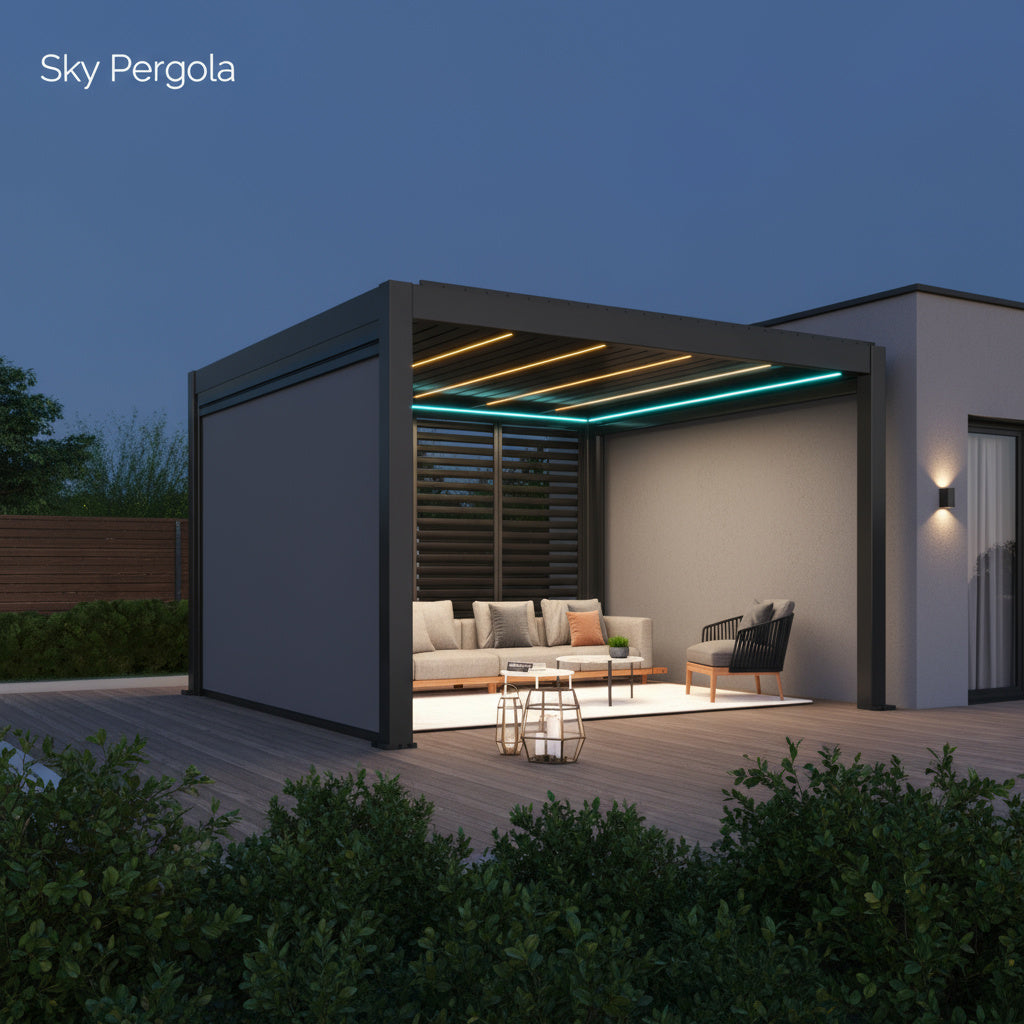
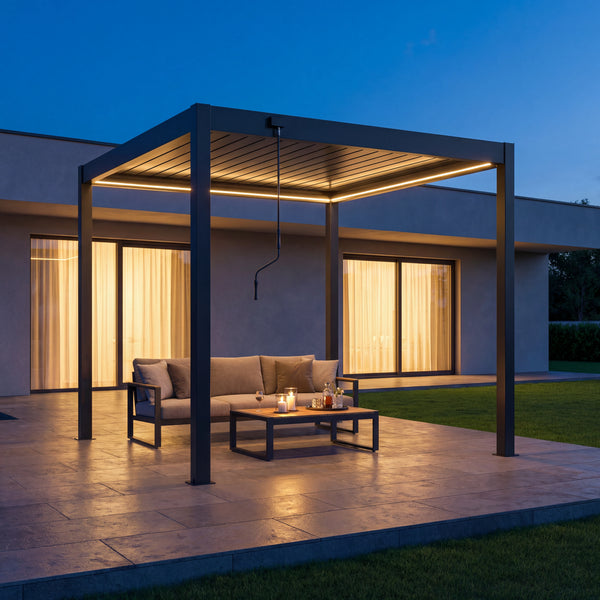
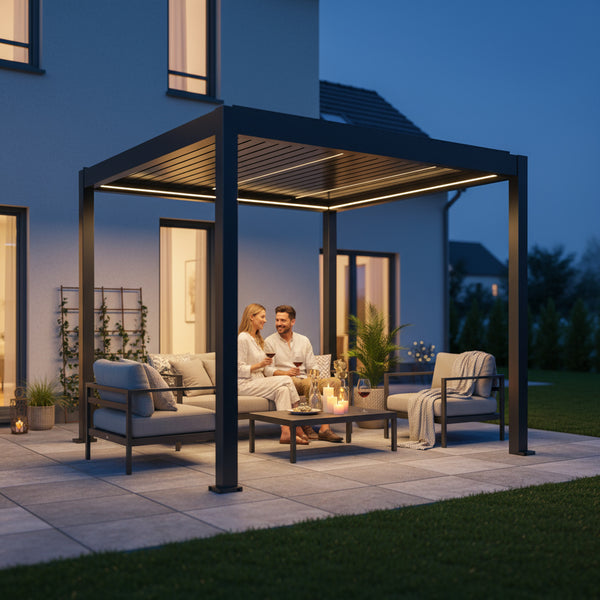
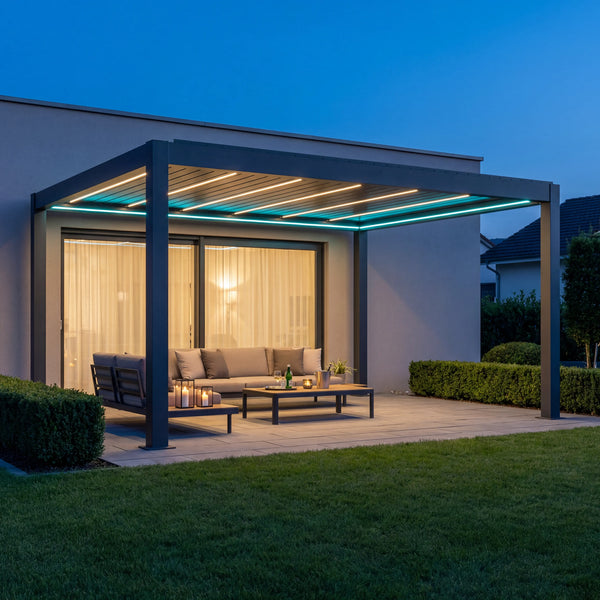
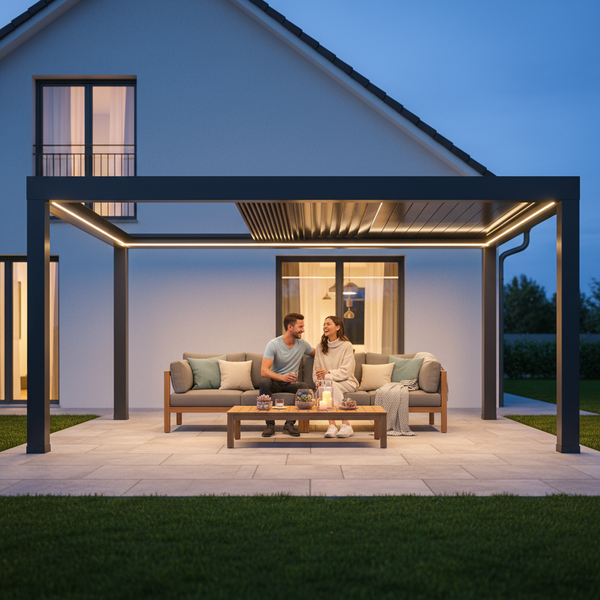
A bioclimatic pergola has motorised aluminium louvres (blades) in the roof that rotate, typically from fully closed to roughly 135 degrees open. You control sunlight, airflow and shade through the day, and close the blades flat for shelter when needed.
A fixed-roof pergola has a solid, permanent panel overhead, usually insulated aluminium sandwich panels or a flat closed roof. It does not move. It gives you constant, predictable shade and rain protection, and it is generally simpler because there are no moving parts.
Both can be free-standing or wall-attached, and both are commonly specified in powder-coated marine-grade aluminium so they survive the heat, UV and coastal salt of the Emirates. If you are still comparing the underlying structure, our overview of an aluminium pergola in Dubai covers why the metal choice matters more here than almost anywhere else.
How each performs in the Gulf climate
The UAE throws a specific set of conditions at outdoor structures: months above 40 degrees Celsius, intense UV, high summer humidity near the coast, fine dust, sudden shamal winds, and a short but heavy rain season between roughly November and March. Here is how the two roof types respond.
Heat and sun control
A louvre roof pergola wins on flexibility. Tilting the blades creates a chimney effect that lets hot air escape rather than trapping it underneath, which keeps the space beneath noticeably cooler in spring and autumn evenings. You can angle the louvres to block the harsh afternoon sun from the west while still letting in soft morning light.
A fixed roof gives constant shade and, when fitted with insulated panels, can actually reduce radiant heat transfer better than a single louvre blade. The trade-off is that the heat which builds up underneath has nowhere to vent unless you add side openings or fans. In peak July and August, when nobody is sitting outside without cooling anyway, this difference matters less than it sounds.
Rain and the wet season
Closed louvres channel rain into integrated gutters and downpipes, so a quality bioclimatic system is genuinely weathertight when shut. Fixed roofs are weathertight by default and have fewer seals to maintain. For villas where the pergola covers a majlis or an outdoor dining area you want usable in any weather, both work, but a fixed roof has a slight reliability edge simply because nothing has to actuate.
Dust, wind and maintenance
Dust is the quiet factor people forget. Louvre blades and their tracks collect fine sand and need occasional cleaning to keep the motor and rotation smooth. A fixed roof has less to clean and no mechanism to service. Against that, good bioclimatic systems are rated for high wind loads and can be programmed to close automatically, and reputable installers fit sand-tolerant components. Neither option is high-maintenance in absolute terms, but the fixed roof asks slightly less of you over the years.
Side-by-side comparison
| Factor | Bioclimatic (louvre) | Fixed roof |
|---|---|---|
| Sun and airflow control | Fully adjustable | Constant shade only |
| Ventilation in shoulder seasons | Excellent (chimney effect) | Needs added openings or fans |
| Rain protection | Weathertight when closed | Always weathertight |
| Moving parts to maintain | Motors, louvre tracks | None |
| Typical cost | Higher | Lower |
| Best for | Lounging, flexible living spaces | Carports, fixed dining, simplicity |
Cost and value over time
A bioclimatic pergola costs more than a fixed roof of the same footprint because of the louvre mechanism, motors and controls. But "more expensive" is not the same as "worse value." If you live in your outdoor space most of the year, as many villa owners in Dubai, Sharjah and Abu Dhabi do once the worst of summer passes, the daily control over light and air can justify the premium quickly. If the pergola mainly shades a parking bay or a utility area, a fixed roof delivers what you need for less. We break down the variables that move the number in our guide to pergola price in Dubai.
A simple way to decide
Run through these questions honestly:
- How will you use the space? Daily living, entertaining and lounging point toward bioclimatic. Carports, walkways and pure shade point toward fixed.
- Do you want to feel breeze and adjust light? If yes, louvres. If you only ever want shade, a fixed roof is simpler.
- What is your tolerance for maintenance? Both are low, but fixed-roof systems have nothing to service.
- Where does the sun hit? West and south-west exposures benefit most from the directional control of louvres in the late afternoon.
- What is the budget priority? Lowest upfront cost favours fixed; long-term flexibility favours bioclimatic.
Many villas end up with a hybrid approach: a bioclimatic zone over the main seating area and a fixed roof over a carport or service yard. There is no rule that one villa needs one type.
Don't overlook installation
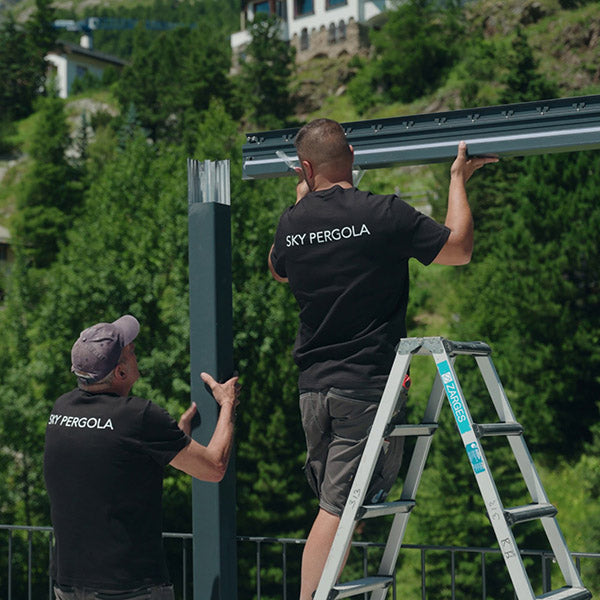
Whichever roof you choose, performance in the UAE depends heavily on correct anchoring, drainage routing and, for bioclimatic units, proper motor and controller setup. Villa rooflines, parapet heights and existing tile or concrete substrates all affect how a unit is fixed and sealed. A structure that is beautiful in a brochure can leak or rattle in a shamal if it is badly mounted, so the quality of the pergola installation in Dubai is as important as the product itself. Ask any supplier how they handle wind loading, water drainage and dust sealing before you commit.
The bottom line
Choose bioclimatic if you want a living outdoor room you can tune to the weather and you plan to use it most of the year. Choose a fixed roof if you want straightforward, reliable shade with minimal upkeep and a lower upfront cost. Both are sound investments in our climate when built from marine-grade aluminium and installed properly, so the "right" answer is simply the one that matches how you actually live outdoors.
If you would like a clear recommendation for your specific villa, layout and sun exposure, book a free consultation with our team. We will assess your space, talk through both options honestly, and give you a tailored proposal with no pressure to decide on the spot.


